
Leadership Lessons from the Orchestra: Why Great Leaders Don’t Play Every Instrument
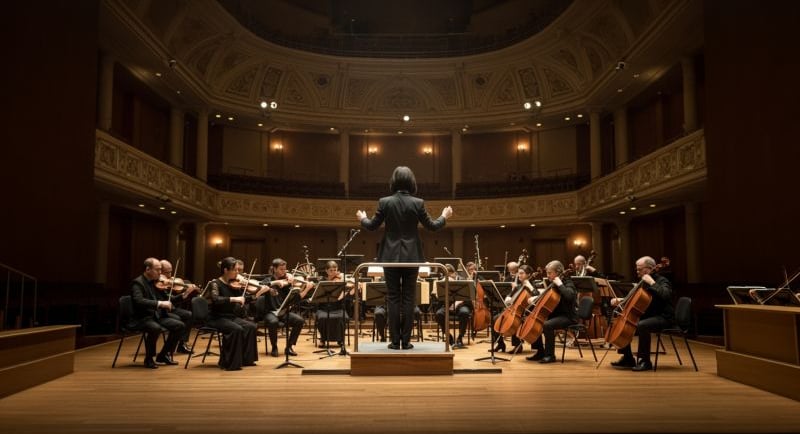
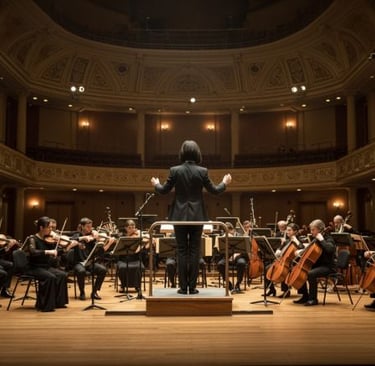
Great leaders do not try to play every instrument. They lead like a conductor guiding an orchestra. From the outside, a conductor stands at the front, shaping the tempo, alignment, and overall energy of the performance. It can look simple and effortless. In reality, it is the result of many hours of preparation, coaching, and refinement. Each musician is supported to master their role so the entire performance comes together in harmony.
Jeni Clift
5/5/20262 min read
Leadership Lessons from the Orchestra: Why Great Leaders Don’t Play Every Instrument
If you’ve ever watched an orchestra perform, you’ve likely been struck by the presence of the conductor. Standing at the front, they guide dozens of highly skilled musicians, each playing a different part, all working towards a single, unified outcome.
At first glance, the role looks simple. A few gestures, a baton, and the music flows.
But what you don’t see is everything that happens behind the scenes.
The unseen work of leadership
Before a single note is performed, there are hours of preparation. Rehearsals. Coaching. Feedback. Adjustments.
The conductor works closely with individuals and sections, helping them refine their technique, understand the nuances of the piece, and align with the broader vision.
This is where leadership truly lives.
Not in the spotlight, but in the preparation.
In business, it’s no different. Strong leaders invest time in developing their people. They coach, guide, and create clarity so that when it’s time to “perform”, whether that’s delivering a client project, hitting a deadline, or launching a product, the team is ready.
The temptation to jump in
Now imagine a very different kind of conductor.
Mid-performance, they suddenly rush over to the piano. They gently (or not so gently) move the pianist aside and say, “I’ll just take this bit.” They play the solo, then sprint back to the front.
Moments later, they dash to the cello. Then the bass. Then the violin section.
What would the orchestra feel?
Undermined.
Distrusted.
Frustrated.
And probably a bit cheesed off.
The flow of the performance would be disrupted. The confidence of the musicians would take a hit. And the overall quality would decline.
Yet this is exactly what happens in many organisations.
Leaders, often with the best intentions, jump into the work. They rewrite the presentation. They take over client conversations. They “just fix” parts of a project.
It might feel helpful in the moment. It might even produce a short term improvement.
But the longer term impact is costly.
The cost of playing every instrument
When leaders consistently step into the detail and take over:
People stop taking ownership
Confidence erodes
Capability stagnates
Trust weakens
And the leader becomes a bottleneck.
Instead of conducting, they’re playing every instrument poorly and exhausting themselves in the process.
Stepping back, or stepping up
Great leadership requires a shift.
It’s not about stepping back and disengaging. It’s about stepping up into the role that matters most.
Like the conductor, leaders need to:
Set the direction and vision
Create alignment across the team
Build capability through coaching and feedback
Enable individuals to perform at their best
Then, when it’s time to deliver, they stay at the front.
They trust the pianist to play the solo.
They trust the cellist to carry their part.
They trust the orchestra.
And importantly, they let people own their success.
Where the gold happens
The real magic, the “gold”, happens when people are trusted and supported to do their best work.
When leaders invest in development, rather than control.
When they guide, rather than override.
When they celebrate, rather than step in.
The result is not just a better performance.
It’s a stronger, more confident, more capable team.
And a leader who is free to lead.
So next time you feel the urge to jump in and “just do this bit”, pause.
Ask yourself:
Am I conducting, or am I trying to play every instrument?
Because the orchestra doesn’t need another musician.
It needs a conductor.